Re-sources: preserve, use, promote, strengthen, Biel
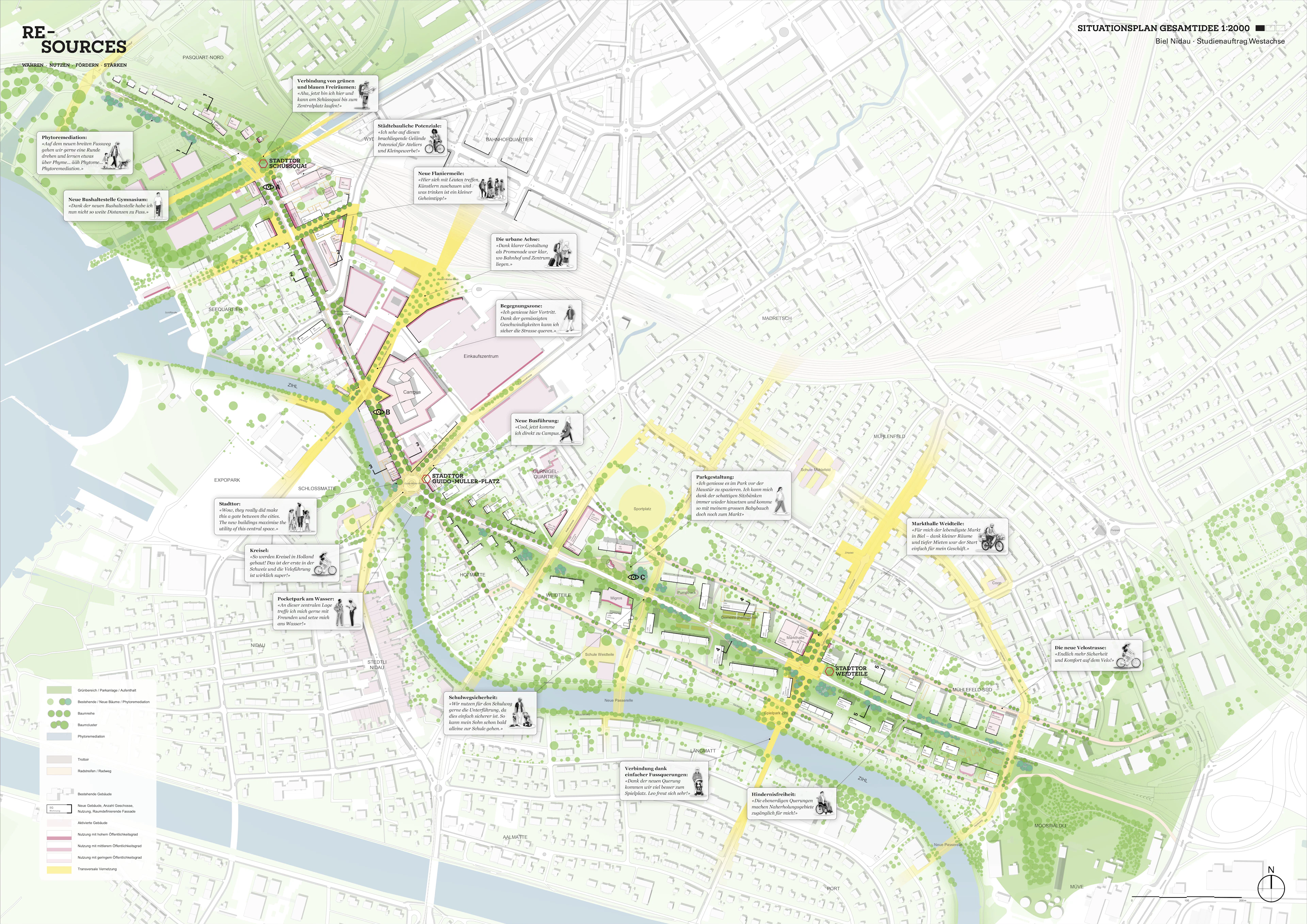
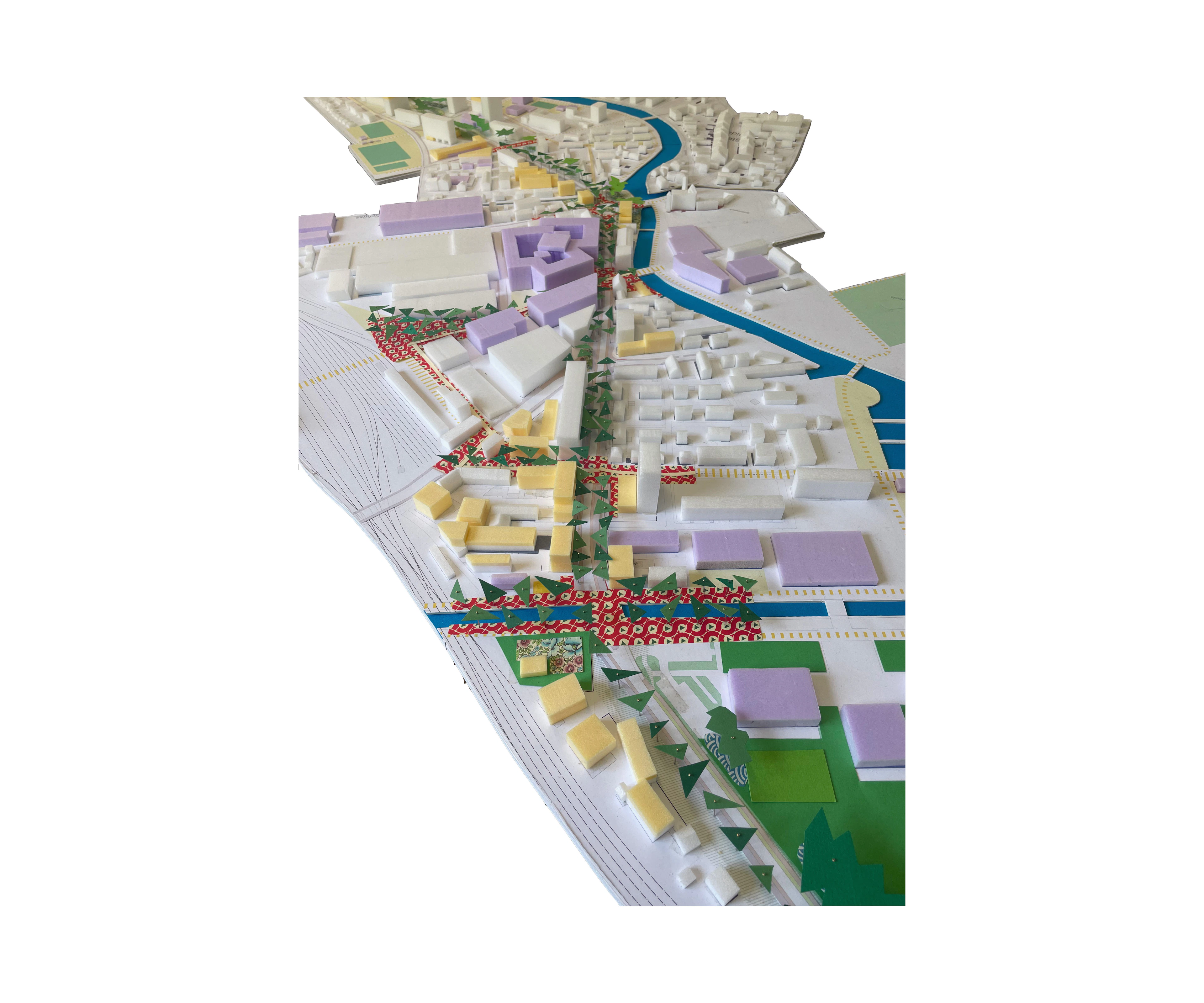
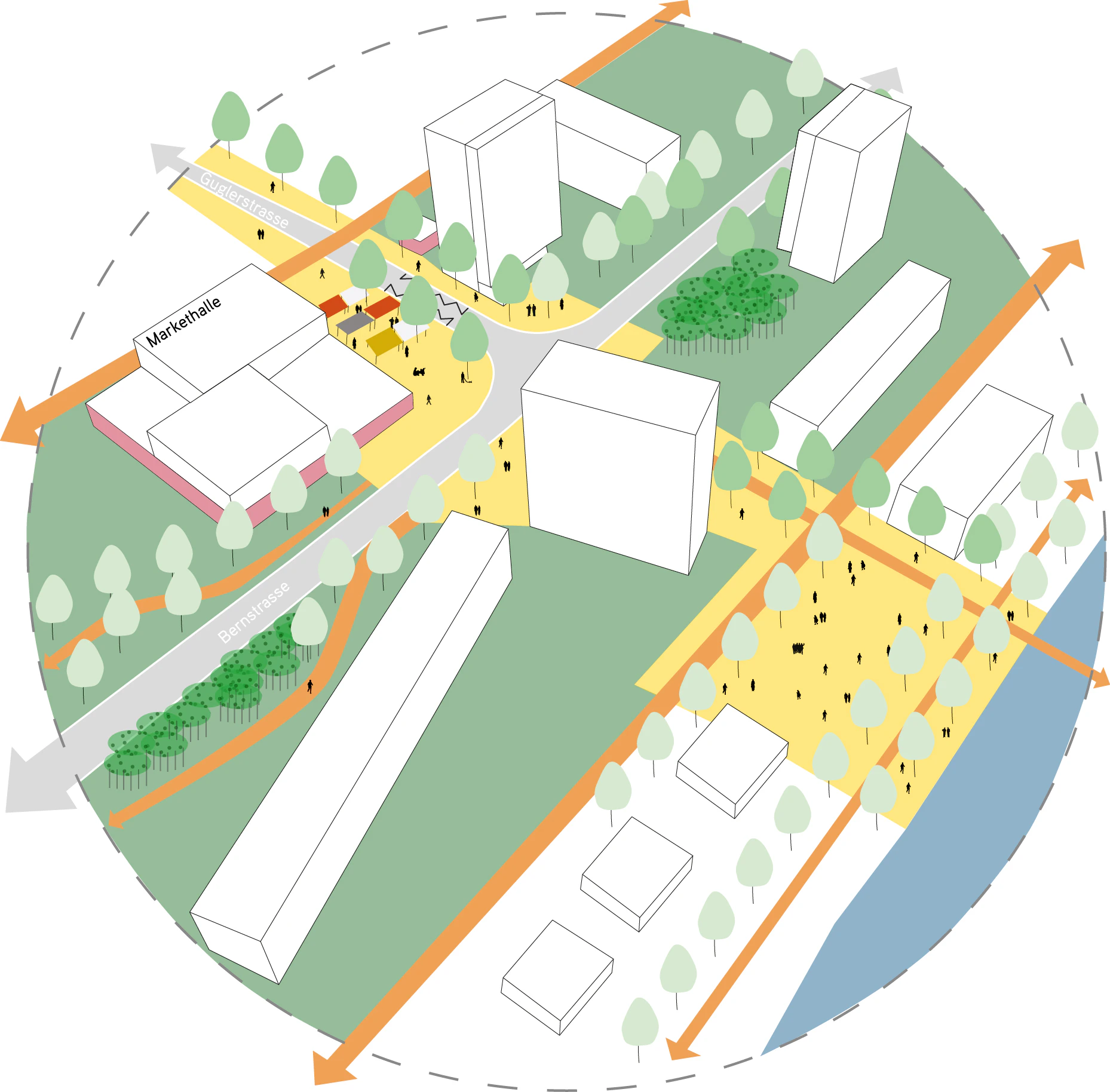
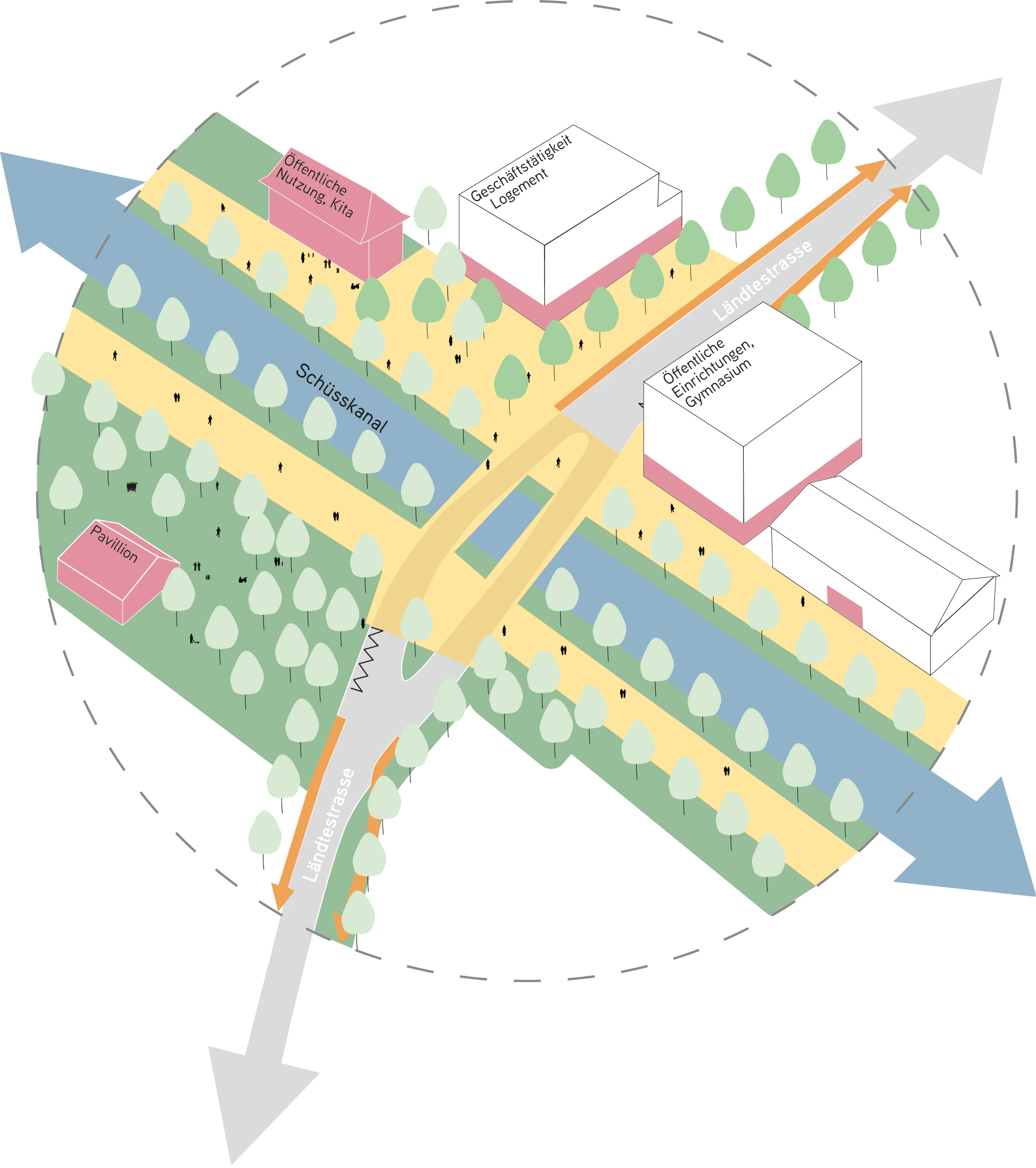
The Biel–Nidau West Axis is one of the region’s main mobility corridors. Today, it faces several challenges: public space dominated by motorized traffic, heterogeneous street profiles, discontinuous pedestrian and cycling routes, weak urban legibility, and environmental nuisances. These dysfunctions create a fragmented corridor, perceived more as a barrier than as a link between the city’s neighborhoods.
The project addresses several major challenges: better connecting the neighborhoods of Biel/Bienne and Nidau, currently separated by a fragmented road axis; rebalancing mobility by giving more space to pedestrians, bicycles, and buses while maintaining smooth traffic flow; improving the quality of public spaces to make them attractive and livable places; enhancing natural resources (lake, rivers, forests) and strengthening ecological resilience; and fostering acceptance of a gradual transformation that respects local habits and context.
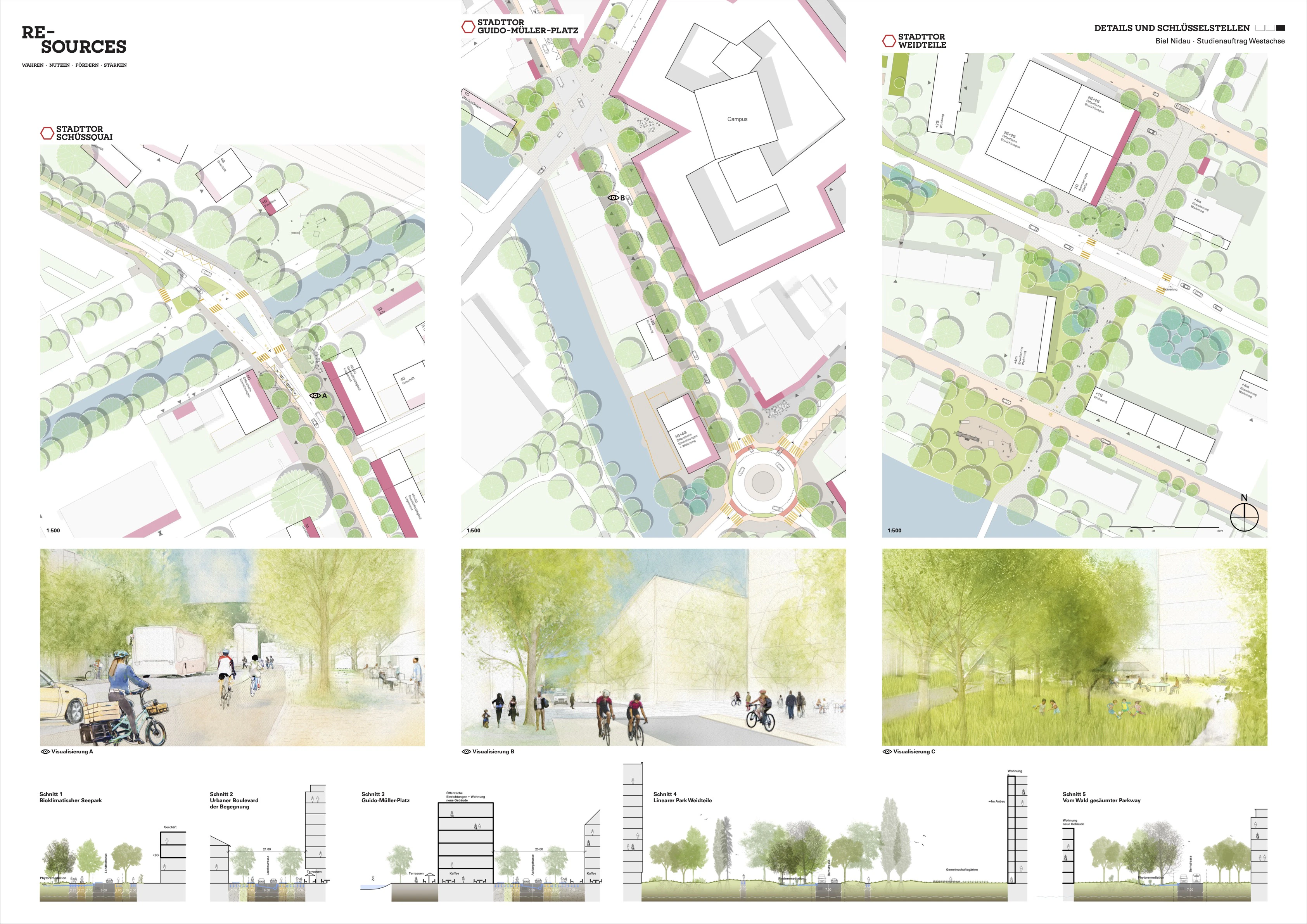
Our response is based on a gentle, step-by-step transformation that builds on existing qualities. Three Stadttore—Schüssquai, Guido-Müller-Platz, and Weidteile—become anchor points where transitions and urban intensities are concentrated. In addition, the development is structured around six key principles:
1. Bioclimatic networks: connect and strengthen major natural areas (Jura, Zihl, Lake Biel).
2. Phytoremediation: treat rainwater as a resource and transform the axis into a “sponge city.”
3. Urban clarity: provide coherent legibility to the sequence of built and landscape profiles.
4. Cross connections: multiply crossings and link neighborhoods, public spaces, and centralities.
5. Diverse mobility: redistribute space in favor of active modes and buses, reduce speed, and keep traffic fluid.
6. Diversity of uses: preserve social and built richness while stimulating urban intensity at strategic points.
In this way, the in-between city is progressively transformed into a coherent, sustainable, and vibrant piece of urban fabric, where landscapes, mobilities, and neighborhoods interweave to create a West Axis embraced and shared by its inhabitants.
mandate type : Parallel study mandate
client: Public Works and Transport Department of the Canton of Bern, Urban Planning Department of the City of Biel, Infrastructure Department of the City of Nidau
period : 2024-2025
program : Redevelopment of a transport axis, redevelopment of public spaces and mobility, definition of development principles
services provided : Vision of progressive transformation and guiding principles, mobility scenarios, concept of ecological resilience, typologies of public spaces and street profiles
urbanism: Raum404
mobility : Metron
external expert : Naomi Zürcher
project lead : Oscar Buson
size : 100 ha