Energy Landscape, Grand Genève
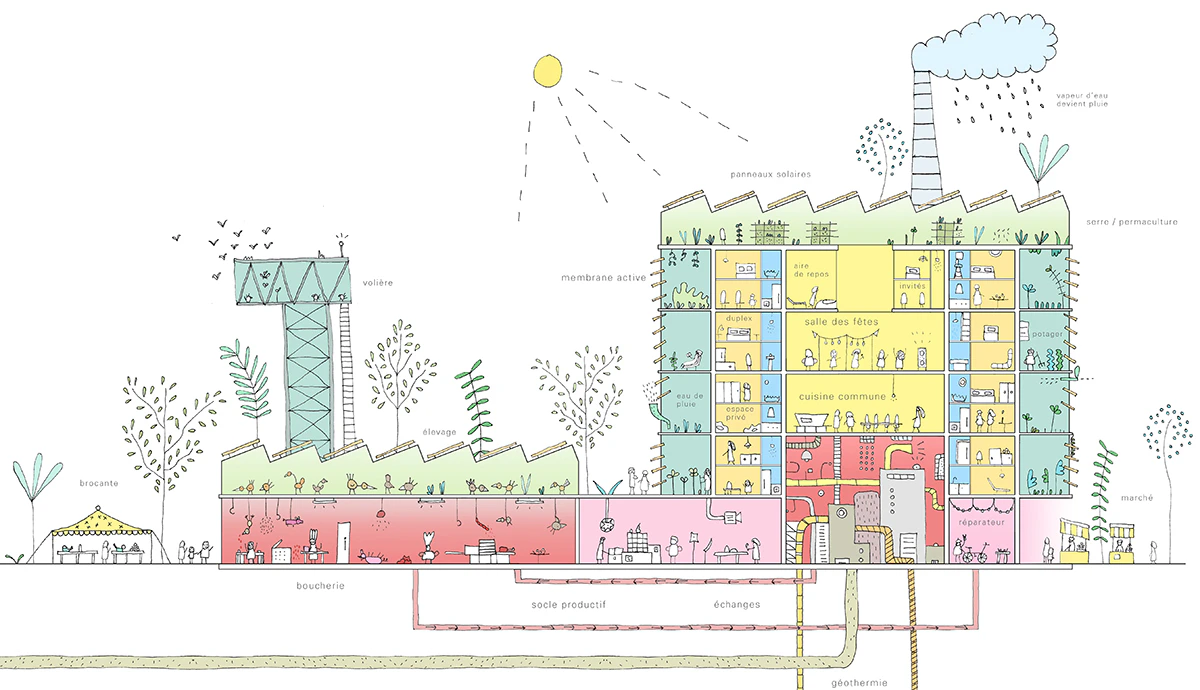
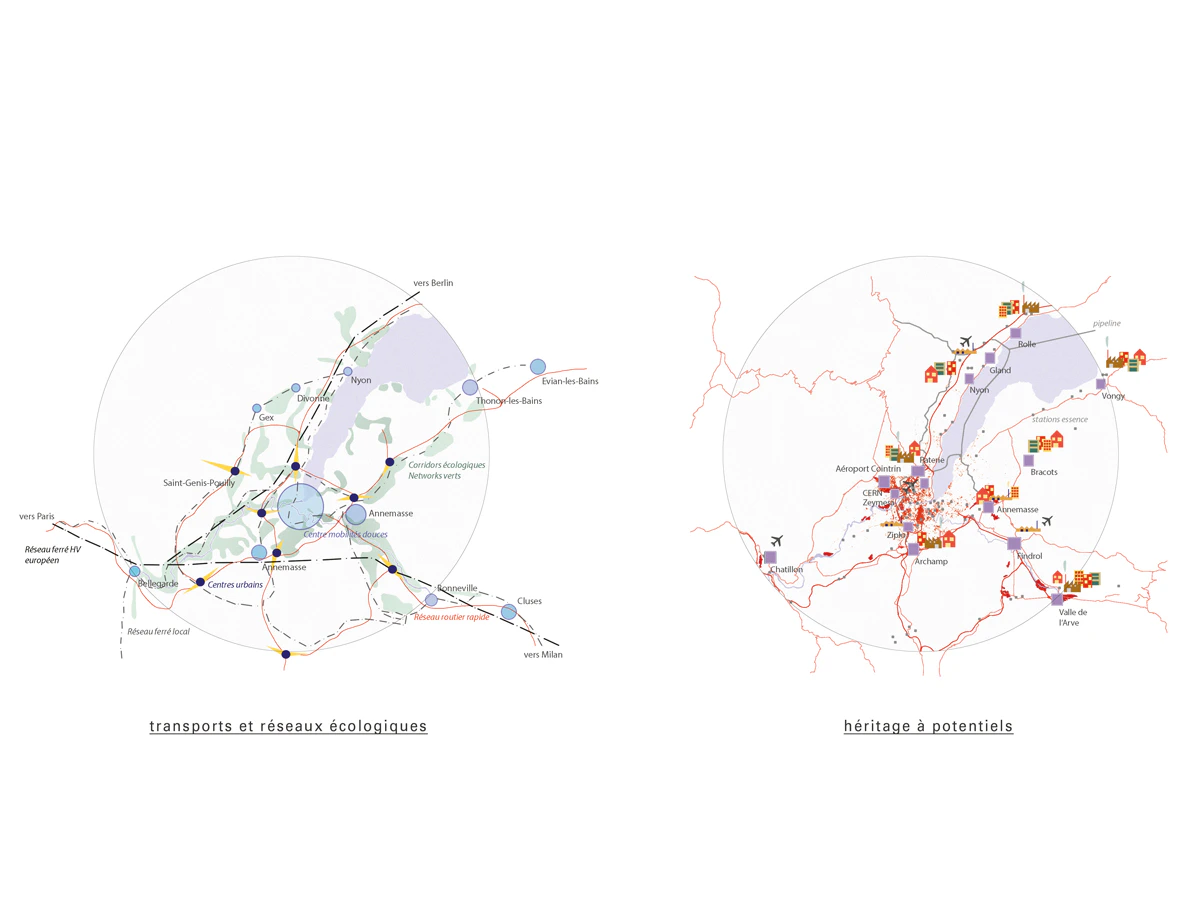
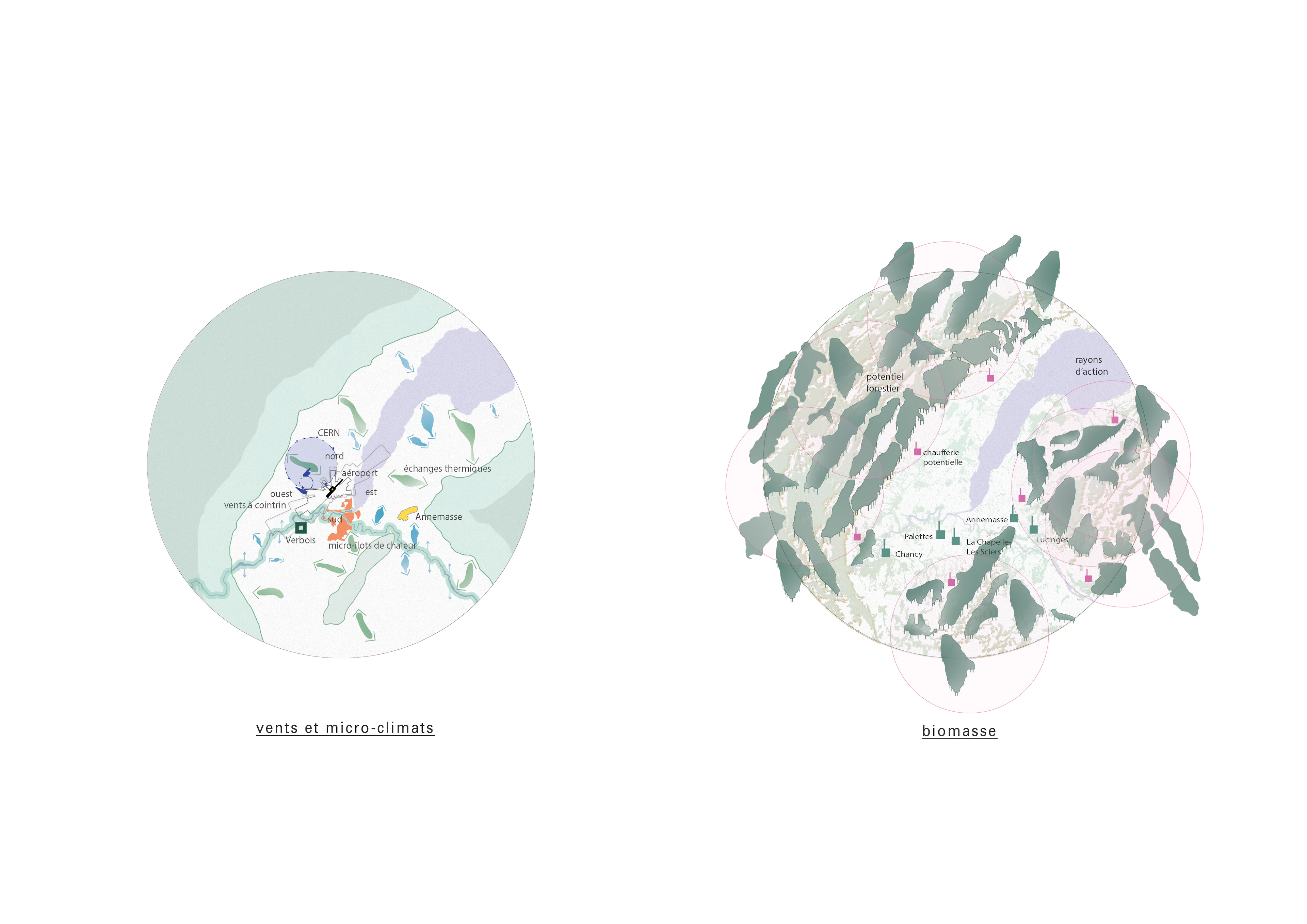
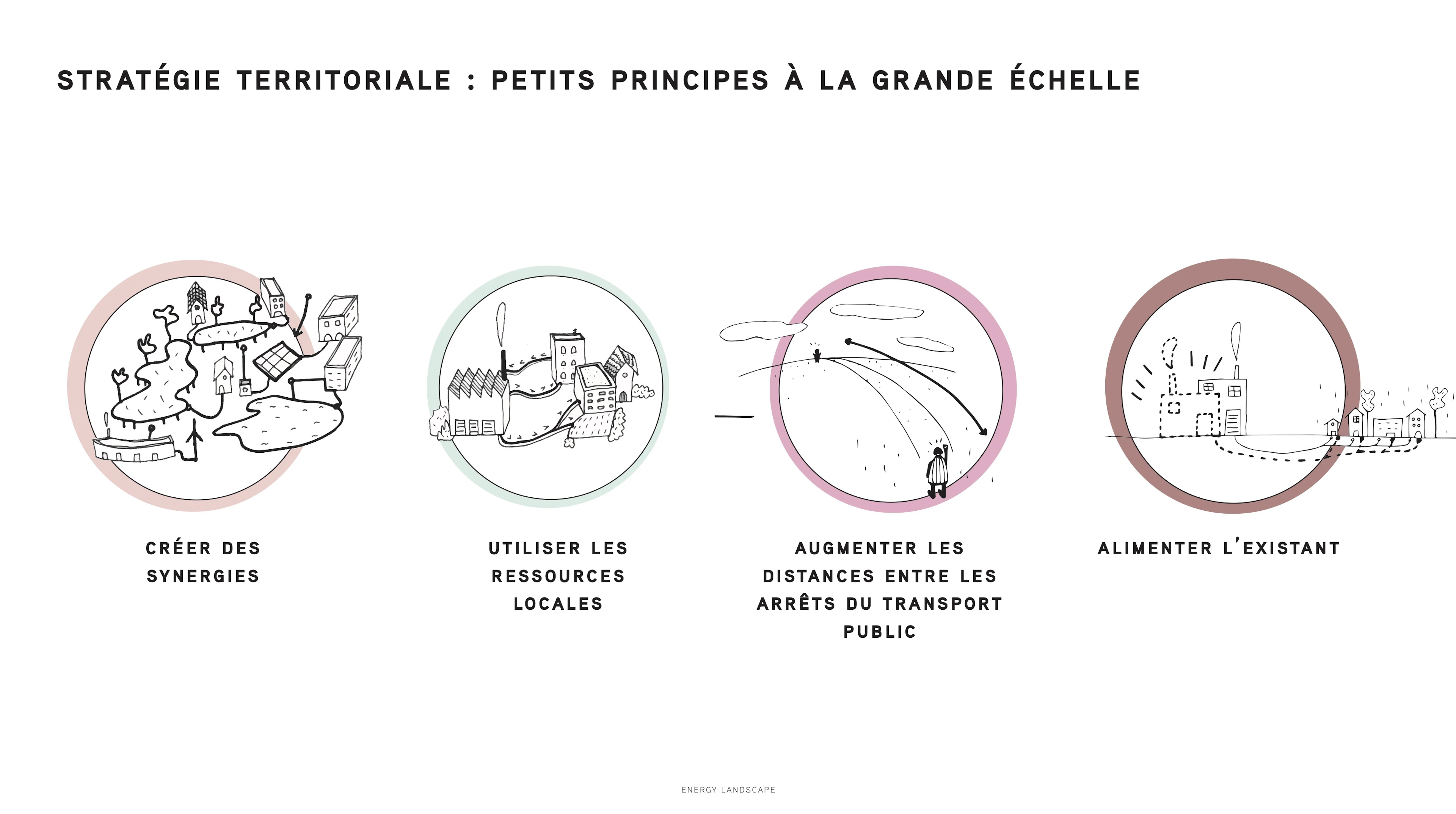
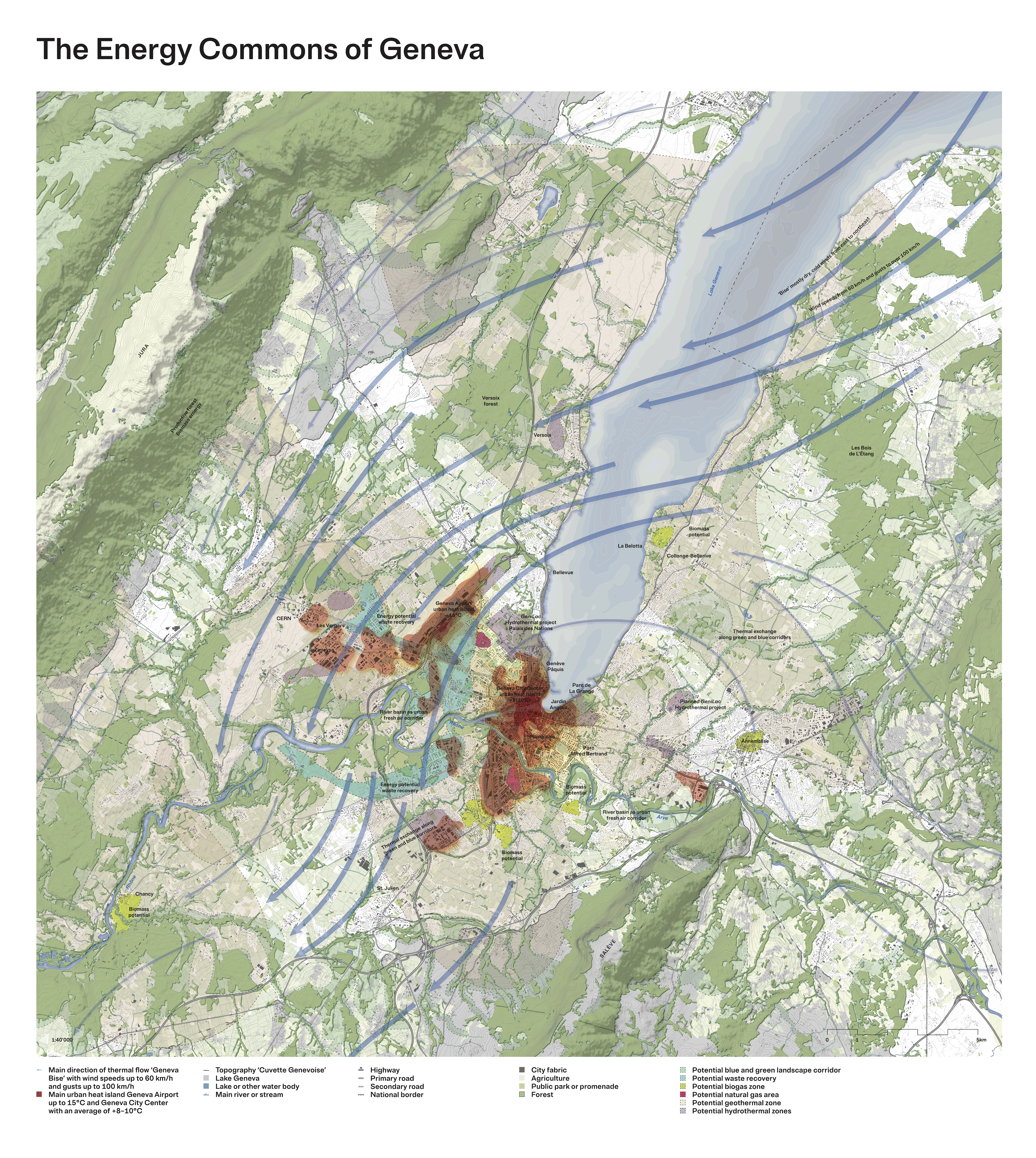
The Energy Landscape project offers a perspective on Greater Geneva through the relationship between energy and landscape, highlighting the region’s dependence on fossil fuels. It views energy as a catalyst for transforming lifestyles and regional organization by exploring the spatial and social impacts of the energy transition. Through a multidisciplinary approach, the project advocates a shift from a culture of individual consumption to a model based on networking and the sharing of resources.
Regional Strategies
At the regional strategy level, the focus is on implementing actions such as: slowing down to place pedestrians at the heart of the mobility system, engaging with the context and creating synergies, as well as promoting different practices—notably through architecture that breathes, connects, and integrates living elements. The context of instability and urgency in which the consultation took place led the team to design an urban project that may seem utopian in some respects but aims to demonstrate an alternative.
Architecture
On the architectural scale, a more detailed typological study was conducted to propose what the team termed a “typology of consciousness.” In January 2020, the final report outlined a possible path for transition—a step-by-step approach toward oil-free energy landscapes in Greater Geneva. Along this path—which wound its way through many other possibilities—the report addressed a slight reduction in passenger volume at Cointrin Airport by 2030 and its closure by 2050, as well as the development of new forms of mobility. The report also described changes in certain social practices, as well as the increase in catastrophic events that were already a daily feature of global news. Six months later, in a follow-up piece examining the impact of the COVID-19 crisis on this initial work, a microscopic virus plunged us all headfirst into a pandemic-stricken world where freedom of movement was restricted and the global economy slowed, revealing the physical limits of development. At that point, our team wanted to offer a more radical illustration of the possibilities for a genuine transition project.
mandate type : Greater Geneva Consultation
client : Fondation Braillard architectes
period : 2019-2020
program : post-oil city, zero-carbon renewable energy production and consumption network, productive city, mobility network, housing, public spaces and facilities
architecture and urbanism : Studio Brühlmann Loetscher Buson
landscape architecture : Lorenz Eugster Landschaftsarchitektur und Stadtplanung
sustainability : Drees&Sommer
social sciences and urbanism : Giulia Scotto, Basel University
ethnography and architecture : Prof. Sascha Roesler, Università della Svizzera italiana
mobility : Emch+Berger
project lead : Oscar Buson
site area : Geneva region